Industrial Control Panels: Types and Applications
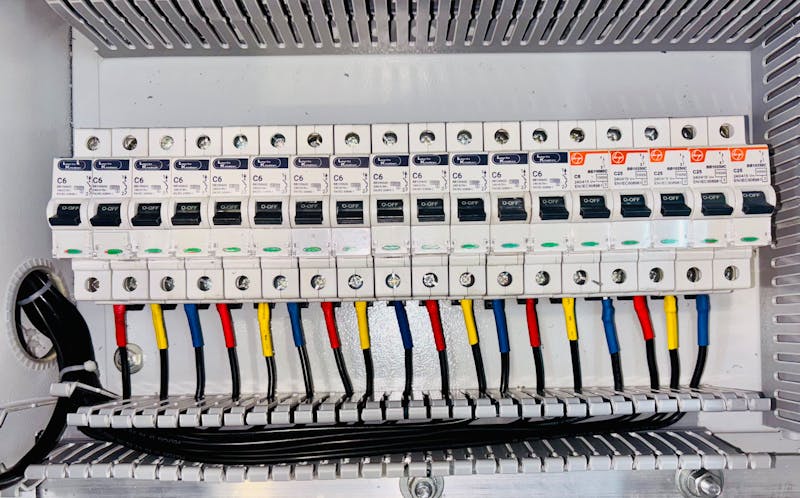
"Control panel" gets used as a catch-all term, but the right panel for a bottling line is not the right panel for a rolling mill. Here's a quick map of what each type actually does.
Power Control Centre (PCC)
A PCC handles the main incoming power supply and distributes it to sub-panels across the plant — think of it as the electrical spine of the facility. It houses the main breaker, metering, and often the incoming APFC equipment.
Motor Control Centre (MCC)
An MCC groups the starters, contactors and overload protection for multiple motors in one enclosure — used wherever a plant runs several motors (pumps, conveyors, fans) that need centralised control and protection.
PLC-based panels
When a process needs sequencing — start this conveyor, then that valve, then check a sensor before the next step — a Programmable Logic Controller (PLC) panel runs the logic. These are common in packaging lines, batching systems and anywhere a fixed process needs to repeat reliably without an operator flipping switches manually.
APFC panels
Covered in more detail in our power factor correction guide — these correct reactive power draw automatically and are usually installed close to the main incomer or near large motor loads.
What to check before you order one
Get the IP rating right for the environment (IP54 for a relatively clean indoor space, IP65 where there's dust or washdown), size busbars for your actual full-load current with headroom for future expansion, and make sure there's a real ventilation or fan-cooling plan — heat is the most common reason panels fail early. A panel built to spec for your actual load costs less over its lifetime than a generic one that gets replaced in three years.
Have a related job in mind?
Tell us what you need and we'll quote it.